
What Is the 7 Heavenly Virtues Test and What Does It Measure?
The 7 Heavenly Virtues Test is a free, multi-dimensional moral character and personality self-assessment that measures your everyday behavioral strength across the seven classical contrary virtues: Humility (Humilitas), Charity (Caritas), Chastity (Castitas), Kindness (Benevolentia), Temperance (Temperantia), Patience (Patientia), and Diligence (Industria). Rather than sorting you into a single static label, this assessment calculates an independent 0% to 100% score for each virtue and plots all seven axes on a live heptagon radar chart.
While our companion 7 deadly sins test measures which capital vices pull hardest on your impulses under stress, competition, or fatigue, this 7 heavenly virtues test evaluates the constructive habits and self-command you rely on to keep those impulses in balance. Whether you search for a seven heavenly virtues test or a 7-axis moral compass, taking both assessments gives you a complete 14-trait character mirror: your strongest self-protective reflexes alongside your deepest everyday virtues.


How the 21-Question and 35-Question 7 Heavenly Virtues Test Works
To support both quick daily reflection and deeper character benchmarking, the interactive 7 heavenly virtues test workbench at the top of this page offers two calibrated editions:
- 21-Question Standard Mode (~2.5 Minutes): Presents 3 concrete everyday scenarios for each of the seven virtues (
3 × 7 = 21statements). Ideal for a fast, accurate baseline snapshot and instant comparison with friends. - 35-Question Deep Edition (~4 Minutes): Presents 5 behavioral facets per virtue (
5 × 7 = 35statements), measuring how consistently you practice each virtue across work, relationships, disagreement, and private habits.
Identifies your highest-scoring primary virtue alongside your second-strongest supporting habit so you see how your top two character strengths work together.
Plots all seven percentages simultaneously on an interactive radar compass paired with vintage woodcut emblems and ornate gold Tarot artwork.
Shows which capital vice each virtue restrains, generates a 1080×1280 PNG result card, and creates a custom friend comparison link.
How the 0%–100% Virtue Scales Are Structured
Every statement on the 7 heavenly virtues test is rated on a 5-point agreement scale (1 = Strongly Disagree / 0 pts to 5 = Strongly Agree / 4 pts). Because each axis is normalized against its own maximum raw score (12 points in 21Q mode or 20 points in 35Q mode), you can read the full scoring breakdown with sample questions to verify how each percentage is calculated.
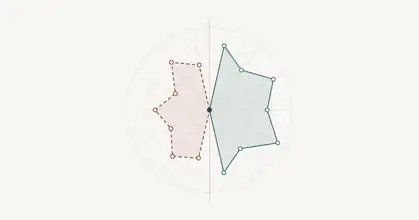
How Your 7 Heavenly Virtues Weigh Against the 7 Deadly Sins
In classical moral psychology, virtues and vices are not separate personality quizzes—they are opposing forces on the same seven behavioral axes. As illustrated in the 14-trait dual radar chart, the seven contrary virtues (the solid green right hemisphere) actively counterbalance the seven capital sins (the dashed orange left hemisphere).
After recording your 7 heavenly virtues test percentages above, take our homepage 7 deadly sins test to compare your Patience against your Wrath, your Kindness against your Envy, and your Humility against your Pride.
The Seven Heavenly Virtues Explained (Classical Origins & Paired Vices)

In classical moral philosophy, the seven heavenly virtues—more accurately termed the seven contrary virtues—originated in the fifth-century Latin allegorical poem Psychomachia (Battle of the Soul) by Aurelius Clemens Prudentius (c. 410 AD), where each virtue directly confronts and remedies one of the seven capital vices later codified by Pope Gregory I and Thomas Aquinas. For a deeper historical walkthrough of all seven pairs, study how the seven deadly sins and virtues pair together or review the full seven deadly sins list.
 I. Humility (Humilitas)
Counters: Pride (Superbia)
Truthful Self-Knowledge Over Ego Armor: Where Pride inflates status and resists correction, Humility anchors ambition in reality—allowing you to share credit generously and learn from anyone without defensiveness.

 II. Charity (Caritas)
Counters: Greed (Avaritia)
Open-Handed Stewardship Over Scarcity Hoarding: Where Greed treats money, credit, and knowledge as a zero-sum fortress, Charity invests surplus time and resources to circulate opportunity across the community.

 III. Chastity (Castitas)
Counters: Lust (Luxuria)
Wholehearted Integrity Over Fleeting Craving: In classical ethics, Castitas means undivided commitment—refusing to let novelty, sensory chemistry, or impulse distractions override long-term promises and respect.

 IV. Kindness (Benevolentia)
Counters: Envy (Invidia)
Genuine Goodwill Over Status Resentment: Where Envy experiences a peer's breakthrough as a personal demotion, Kindness celebrates excellence in others and turns peer success into shared momentum.

 V. Temperance (Temperantia)
Counters: Gluttony (Gula)
Mindful Moderation Over Comfort Bingeing: Ranked among the four cardinal virtues since Plato and Aristotle, Temperance is the self-mastery that savors pleasure consciously and stops cleanly at "enough."

 VI. Patience (Patientia)
Counters: Wrath (Ira)
Measured Composure Over Vengeful Reactivity: Patience absorbs delay, friction, and disagreement without letting sudden anger hijack your speech—pairing calm emotional gravity with clear boundaries.

 VII. Diligence (Industria)
Counters: Sloth (Acedia)
Relentless Craft Over Behavioral Inertia: Where Sloth retreats from high-friction effort once novelty fades, Diligence honors commitments through disciplined daily follow-through—finishing the unglamorous final 10% of every job with care.

| Axis | Heavenly Virtue (Latin) | Capital Vice Countered | Core Behavioral Strength Measured |
|---|---|---|---|
| Axis I | Humility (Humilitas) | Pride (Superbia) | Truthful self-knowledge, sharing credit, and staying coachable without ego defensiveness |
| Axis II | Charity (Caritas) | Greed (Avaritia) | Open-handed generosity with time, resources, and mentorship without a zero-sum ledger |
| Axis III | Chastity (Castitas) | Lust (Luxuria) | Wholehearted emotional integrity, loyal commitments, and focus over fleeting thrills |
| Axis IV | Kindness (Benevolentia) | Envy (Invidia) | Genuine goodwill and celebration when peers succeed rather than bitter social comparison |
| Axis V | Temperance (Temperantia) | Gluttony (Gula) | Mindful moderation and knowing what "enough" feels like across food, screens, and treats |
| Axis VI | Patience (Patientia) | Wrath (Ira) | Steady composure under provocation, delay, or conflict without vengeful rumination |
| Axis VII | Diligence (Industria) | Sloth (Acedia) | Disciplined follow-through and consistent craft even when tasks turn tedious |
Which Heavenly Virtue Are You? Reading Your 7-Axis Radar Profile
When visitors search which heavenly virtue are you or take a 7 heavenly virtues quiz, they often expect a single static archetype. In real life, moral character rarely operates on a single axis—most people who complete the 7 heavenly virtues test exhibit a Primary + Secondary Virtue Dyad that shapes how they collaborate, handle stress, and recover from setbacks:
- High Humility (
83%) + High Diligence (75%) — "The Quiet Craftsman": You care far more about mastering the work and delivering reliable results than chasing public applause. Teams trust you implicitly because your ego never gets in the way of fixing a problem, though you should guard against letting louder colleagues overlook your contributions. - High Charity (
80%) + High Kindness (78%) — "The Community Catalyst": Your radar peaks on both outward-facing virtues (Caritas and Benevolentia). You naturally mentor newcomers, share credit, and celebrate peer breakthroughs without envy. Your growth edge is maintaining firm personal boundaries so generosity never turns into exhaustion. - High Patience (
82%) + High Temperance (74%) — "The Stoic Anchor": When conflict, delay, or high-stress temptation hits, you remain the calmest person in the room. You resist both sudden anger (Ira) and comfort bingeing (Gula), providing steady emotional gravity for everyone around you (and you can verify whether quiet composure hides internalized tension on our 6-scale Multidimensional Anger Test). - Developing Edge (
0% – 34%on Any Axis): A lower percentage on this assessment is not a moral failure—it simply pinpoints which habit gets squeezed first when you are tired or overloaded. Pairing your virtue radar with your results on the 7 deadly sins test reveals whether a low score on Patience or Temperance corresponds to an active spike on Wrath or Gluttony.
Who Usually Takes the 7 Heavenly Virtues Test?
Learners exploring how Prudentius's Psychomachia, Aristotelian moderation, and Thomistic virtue ethics translate into modern behavioral habits.
Visitors pairing their 7 heavenly virtues test radar with their 7 deadly sins profile to spot blind spots across patience, boundaries, and daily discipline.
Creators using the 21Q and 35Q scales to benchmark fictional characters across all seven classical virtues and capital vices.
Which deadly sin scored highest on your radar—and did your secondary sin surprise you? Leave your percentages or feedback below.